



CYP1A2
CYP1A2 is a major hepatic cytochrome P450 enzyme that contributes approximately 5-20% of the total microsomal P450 pool and catalyzes oxidative biotransformation of numerous clinically relevant xenobiotics and therapeutic compounds, including caffeine, clozapine, duloxetine, and theophylline[1][2]. Mechanistically, CYP1A2 functions within the phase I xenobiotic metabolism pathway, where it mediates oxidation reactions and participates in the metabolic activation of aromatic heterocyclic amines and polycyclic aromatic hydrocarbons that are associated with carcinogenic processes[1][3]. CYP1A2 expression is strongly regulated by the aryl hydrocarbon receptor (AHR) signaling network and is influenced by environmental, genetic, and inflammatory factors that contribute to substantial interindividual variability in enzyme activity[1][4]. In disease-related contexts, hepatic CYP1A2 expression is reduced during inflammation, cholestasis, and sepsis, linking altered CYP1A2 activity to pathological changes in drug metabolism and toxicological responses[1][5]. Compared with related family members, CYP1A2 is constitutively expressed in the liver, whereas CYP1A1 shows broader inducible expression patterns despite substantial substrate overlap, making isoform-specific characterization essential for accurate drug metabolism studies[3][6]. For experimental applications, selective inhibition approaches and humanized mouse models have been used to distinguish CYP1A2-mediated metabolism from CYP1A1 activity and to improve prediction of xenobiotic disposition and pharmacokinetic outcomes[3].
References:
- [1]. Klein K, et al. Pathway-Targeted Pharmacogenomics of CYP1A2 in Human Liver. Front Pharmacol. 2010 Nov 2;1:129. [Content Brief]
- [2]. Song G, et al. Determination of Human Hepatic CYP2C8 and CYP1A2 Age-Dependent Expression to Support Human Health Risk Assessment for Early Ages. Drug Metab Dispos. 2017 May;45(5):468-475. [Content Brief]
- [3]. Kapelyukh Y, et al. Defining the Contribution of CYP1A1 and CYP1A2 to Drug Metabolism Using Humanized CYP1A1/1A2 and Cyp1a1/Cyp1a2 Knockout Mice. Drug Metab Dispos. 2019 Aug;47(8):907-918. [Content Brief]
- [4]. Wikipedia.
- [5]. Zhou M, et al. The potential role of transcription factor aryl hydrocarbon receptor in downregulation of hepatic cytochrome P-450 during sepsis. Int J Mol Med. 2008 Apr;21(4):423-8. [Content Brief]
- [6]. Hammer H, et al. Cross-species analysis of hepatic cytochrome P450 and transport protein expression. Arch Toxicol. 2021 Jan;95(1):117-133. [Content Brief]
-
CYP1A2 Related Products (10)
Related Products (10)

-
7-Benzyloxy-4-(trifluoromethyl)coumarin
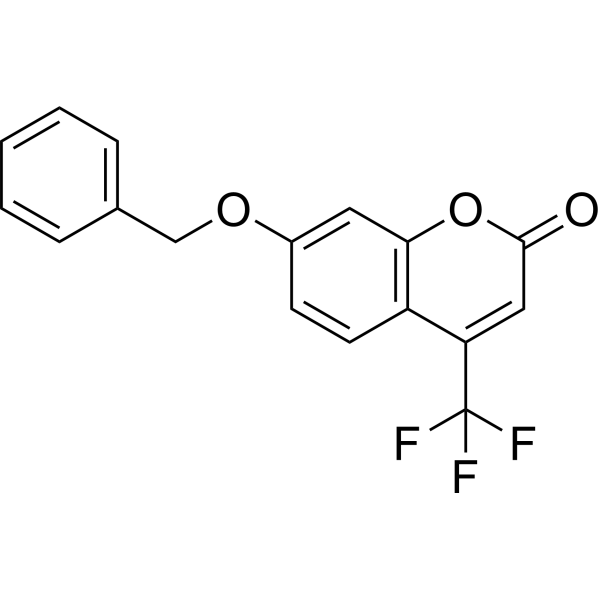 0 ImagesSynonyms: 7-BFC7-Benzyloxy-4-(trifluoromethyl) coumarin (7-BFC) is a coumarin-based fluorescent substrate. 7-Benzyloxy-4-(trifluoromethyl) coumarin serves as a substrate for cDNA-expressed CYP1A2 and CYP3A4, and is metabolized into 7-hydroxy-4-trifluoromethylcoumarin (HFC). 7-Benzyloxy-4-(trifluoromethyl) coumarin supports metabolic studies of cytochrome P450 subtypes via its fluorescent metabolite.
-
VU6001966
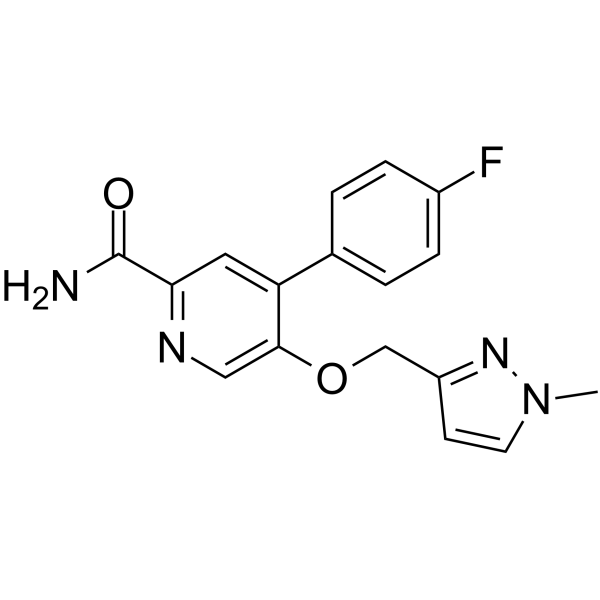 0 ImagesVU6001966 is a brain-penetrant and selective mGlu2 receptor inhibitor. VU6001966 blocks mGlu2 receptor activity, counteracts LY379268 (HY-103558)-mediated blood-brain barrier protection and inflammatory cytokine dampening in microglia under inflammatory conditions. VU6001966 enhances antidepressant effects when combined with Scopolamine (HY-N0296). VU6001966 can be used for the research of major depressive disorder.
-
(R)-(+)-Warfarin
 0 Images(R)-(+)-Warfarin is an orally active chiral 4-hydroxycoumarin compound with vitamin K epoxide reductase (VKOR) inhibitory activity and cytochrome P450 substrate activity. (R)-(+)-Warfarin undergoes stereoselective metabolism via CYP1A2 to form 6-Hydroxywarfarin and 8-Hydroxywarfarin, and is metabolized via CYP3A4 to produce 10-Hydroxywarfarin (HY-134999). (R)-(+)-Warfarin can be used for the research of thromboembolic diseases.
-
Utreloxastat
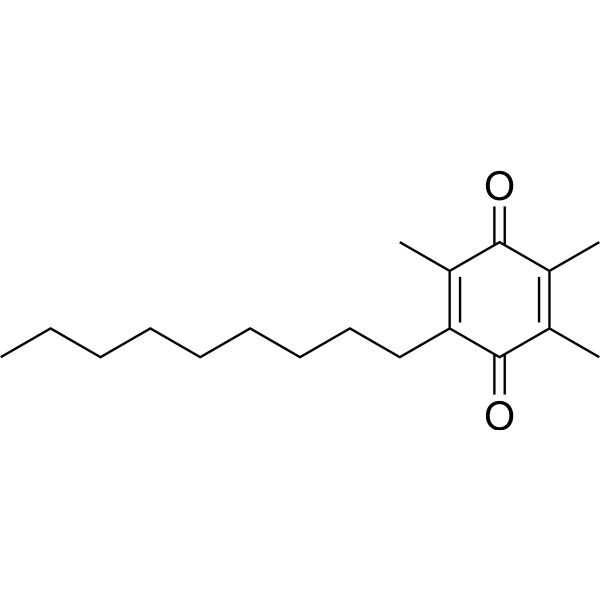 0 ImagesSynonyms: PTC857Utreloxastat (PTC857) is an orally active and blood-brain barrier-permeable 15-lipooxygenase inhibitor. Utreloxastat is a weak inhibitor of CYP1A2 and 2B6 with an IC50 of >5.3 μM. Utreloxastat reduces oxidative stress and inhibits the consumption of reduced glutathione and ferroptosis. Utreloxastat can be used in the study of neurodegenerative diseases characterized by high levels of oxidative stress and mitochondrial pathology, such as amyotrophic lateral sclerosisc.
-
(R)-(+)-Warfarin-d5
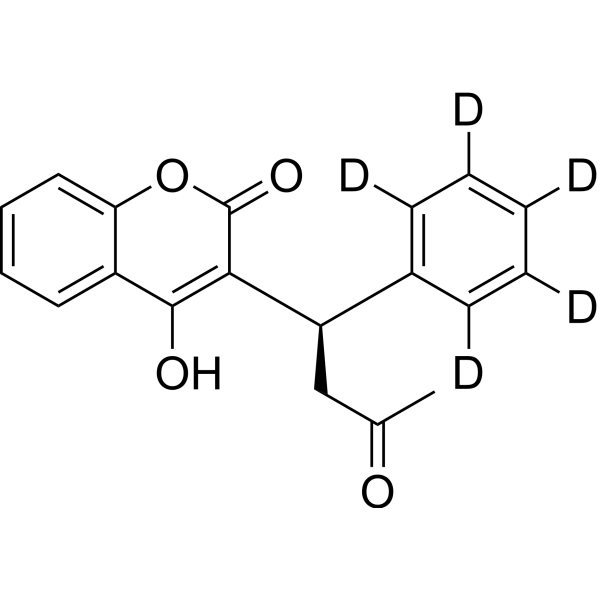 0 Images(R)-(+)-Warfarin-d5 is the deuterated-labeled (R)-(+)-Warfarin (HY-W015998). (R)-(+)-Warfarin is an orally active chiral 4-hydroxycoumarin compound with vitamin K epoxide reductase (VKOR) inhibitory activity and cytochrome P450 substrate activity. (R)-(+)-Warfarin undergoes stereoselective metabolism via CYP1A2 to form 6-Hydroxywarfarin and 8-Hydroxywarfarin, and is metabolized via CYP3A4 to produce 10-Hydroxywarfarin (HY-134999). (R)-(+)-Warfarin can be used for the research of thromboembolic diseases.
-
FGFRs-IN-1
 0 ImagesCat. No.: HY-170846FGFRs-IN-1 (Compound A16) is the orally active inhibitor for FGFR, that inhibits FGFR1/2/3/4 with IC50s of 2.3, 7, 11, and 163 nM, respectively. FGFRs-IN-1 also inhibits VEGFR1/2/3, Abl, and Flt3 with IC50s of 61, 176, 112, 26, and 353 nM, respectively. FGFRs-IN-1 exhibits weak inhibitory efficacy against CYP enzymes. FGFRs-IN-1 reduces the expression of α-SMA and collagen I, and inhibits epithelial-mesenchymal transition (EMT) in TGF-β1 stimulated A549 cell. FGFRs-IN-1 exhibits anti-inflammatory activity in Bleomycin (HY-17565)-induced mouse pulmonary fibrosis model and CCl4 (HY-Y0298)-induced mouse liver fibrosis model.
-
BMS-223131
 0 ImagesCat. No.: HY-19397CAS No.: 275375-69-4BMS-223131 (Compound 1) is a potent maxi-K potassium channel opener. BMS-223131 has a strong inhibitory effect on the CYP2C9 enzyme (IC50 = 1.7 μM) and also shows varying degrees of inhibition on other common CYP enzymes such as CYP1A2, CYP2C19, CYP2D6, and CYP3A4. BMS-223131 can enhance the outward current mediated by maxi-K, by promoting K+ efflux to hyperpolarize the cell membrane and reducing Ca2+ influx. BMS-223131 can be used for the research of neurological disease, such as stroke.
-
NNRT-IN-10
 0 ImagesCat. No.: HY-174417CAS No.: 2459751-62-1NNRT-IN-10 is a potent, selective and orally active non-nucleoside HIV-1 reverse transcriptase (NNRTI) inhibitor with with an EC50 values ranging from 1.16 to 18.3 nM for HIV and its mutant strains. NNRT-IN-10 exhibits good pharmacokinetic properties and favorable safety profiles. NNRT-IN-10 can be used for the study of AIDS, caused by HIV-1.
-
Isomalathion
 0 ImagesCat. No.: HY-W707749CAS No.: 3344-12-5Isomalathion is an isomer and impurity of Malathion (HY-B0943). Isomalathion inhibits Carboxyesterase and AChE, with an IC50 value of 3.2 μM against bovine acetylcholinesterase. Isomalathion moderately reduces CYP1A2 transcript levels, increases CYP2B6 transcript levels, and induces dose-dependent DNA damage. Malathion is an organophosphorus insecticide.
-
meso-Zeaxanthin
 0 ImagesCat. No.: HY-167632CAS No.: 31272-50-1Synonyms: (3R,3′S)-Zeaxanthinmeso-Zeaxanthin ((3R,3′S)-Zeaxanthin) is an orally active xanthophyll carotenoid. meso-Zeaxanthin inhibits CYP1A1, CYP1A2, CYP2B1/2, COX-2, TNF-α and iNOS, and enhances the activities of Uridine diphosphate glucuronosyltransferase and Glutathione-S-transferase. meso-Zeaxanthin quenches oxygen free radicals. meso-Zeaxanthin filters short-wavelength blue light, alleviates oxidative damage and visual abnormalities. meso-Zeaxanthin reduces tumor incidence, prolongs tumor latency and survival rate of tumor-bearing mice, and inhibits paw edema. meso-Zeaxanthin can be used in research related to sarcoma and age-related macular degeneration.



